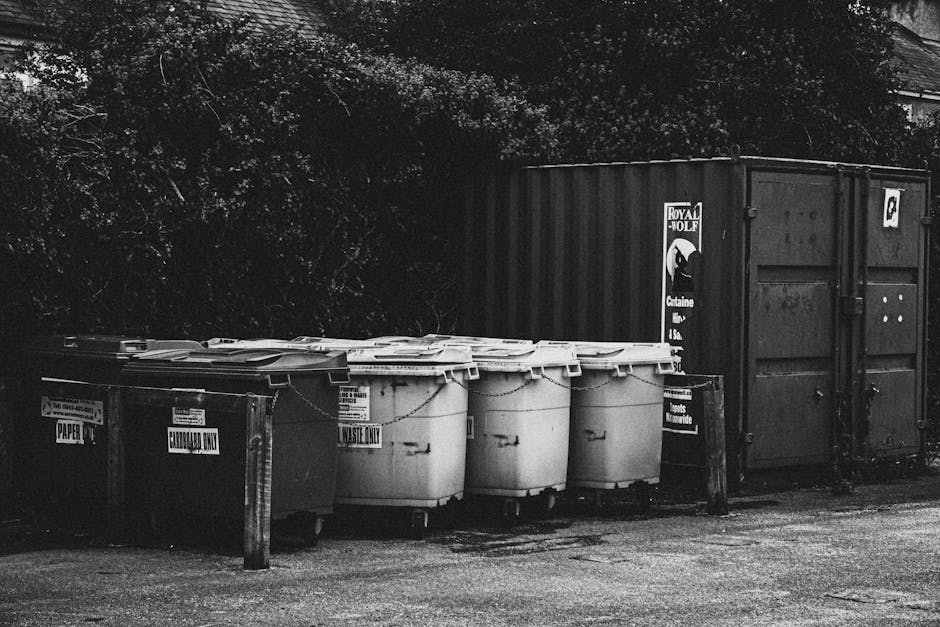
Abbey Wood station area bulky rubbish collection options
If you are staring at an old sofa, a broken wardrobe, or a pile of odds and ends that will not fit in the car, you are probably looking for the most sensible Abbey Wood station area bulky rubbish collection options. And fair enough - bulky waste has a way of sitting there, taking up half the hallway, quietly becoming everyone's problem.
This guide walks you through the practical choices available, how each one works, and how to decide what suits your situation. Whether you need something quick, low-cost, or better suited to mixed household items, the aim here is simple: help you clear the clutter without making the process more stressful than it needs to be.
We will also look at what to avoid, what to check before booking, and how to keep disposal responsible. Around Abbey Wood station, where flats, family homes, rentals, and busy commuter routines all overlap, those details matter more than people think.
Table of Contents
- Why Abbey Wood station area bulky rubbish collection options Matters
- How Abbey Wood station area bulky rubbish collection options Works
- Key Benefits and Practical Advantages
- Who This Is For and When It Makes Sense
- Step-by-Step Guidance
- Expert Tips for Better Results
- Common Mistakes to Avoid
- Tools, Resources and Recommendations
- Law, Compliance, Standards, or Best Practice
- Options, Methods, or Comparison Table
- Case Study or Real-World Example
- Practical Checklist
- Conclusion
- Frequently Asked Questions
Why Abbey Wood station area bulky rubbish collection options Matters
Bulky rubbish is different from everyday bin waste. It is awkward, heavy, often oddly shaped, and usually too large for normal household collections. A mattress, broken chest of drawers, old fridge, or tired sofa can sit in a room for weeks because moving it is half the battle. Sound familiar?
In the Abbey Wood station area, that challenge can become more noticeable for a few reasons. Many homes have limited storage space. Access can be tight in some blocks or terraces. Parking may be awkward. And if you live close to a station, your timetable is probably already full enough without spending a Saturday trying to wrestle a wardrobe into a borrowed van.
Choosing the right bulky rubbish collection method matters because it affects four things at once: time, cost, convenience, and compliance. Pick badly and you can end up with hidden charges, missed collections, or waste left sitting where it should never have been. Pick well and the whole job feels surprisingly manageable.
There is also a wider practical point. Responsible disposal helps keep shared entrances, pavements, and service areas clear. That matters in busy neighbourhoods where one abandoned sofa can quickly become everyone's irritation. Let's face it, nobody wants to step around a broken table leg on the way to the train.
Expert summary: The best bulky waste solution is not always the cheapest or the fastest. It is the one that matches the item type, access, timing, and disposal rules without creating extra stress for you or your neighbours.
How Abbey Wood station area bulky rubbish collection options Works
Most bulky rubbish collection options follow a similar pattern: you identify what needs removing, check whether the items are accepted, choose a collection method, and arrange a time that works for access. The differences sit in the details.
1. Council bulky waste collection
Many residents first think about local authority collection. That is often a sensible starting point if you only have a small number of items and you are not in a rush. Council services tend to be structured, scheduled, and suitable for standard household bulky waste. The trade-off is that collections may need to be booked in advance and item rules can be quite specific.
This option can work well for a single mattress, a chair, or a few household pieces. But if you have a lot to clear, or if access is difficult, the process can become clunky. You may also need to move items to a designated collection point, which is fine if you have the space and the time. Less so if you live up several flights of stairs.
2. Private bulky waste collection
A private collection service is usually the more flexible route. You book a team to come at an arranged time, they lift the items, load them, and take them away. This is often the most practical option for mixed bulky waste, heavier items, or clear-outs that cannot wait around.
The real advantage here is convenience. You do not need to hire a van, find helpers, or figure out where everything goes. If you have a sofa that will not make it through the hallway without a small amount of swearing - normal, by the way - a removal team is often the calmer choice.
If you are comparing options, pages such as furniture clearance and general waste removal can help you understand how item-specific and mixed-load services differ.
3. Item-specific disposal
Sometimes the easiest route is to handle one category of item on its own. For example, mattresses, fridges, sofas, or garden waste can each have slightly different handling needs. Separating those items can simplify pricing and improve recycling outcomes.
That is especially useful if one item is the main problem. A fridge with a broken seal, for instance, should not be treated the same way as a stack of old cardboard. Likewise, a damp garden fence panel needs a different approach from a wardrobe still in decent condition.
4. Full property or room clearance
If the bulky waste is part of a bigger job - say, a tenancy end, probate clearance, loft clear-out, or moving house - a broader clearance service may be better value than arranging item-by-item collection. That can save repeated bookings and reduce the chance of something being overlooked.
Services like house clearance, flat clearance, loft clearance, and garage clearance are often worth exploring when the "bulky rubbish" is really a whole pile of belongings rather than one or two odd pieces.
How the collection process usually feels in real life
On the day itself, the process is usually quite straightforward: the team arrives, checks what is going, confirms access, and removes items from the agreed location. The practical part is making sure there is a clear route. Doors open, lifts available if relevant, no surprise obstacles, and ideally no last-minute hunt for the front door key. You know how these things go.
Good providers will also separate reusable, recyclable, and non-recyclable items where possible. That matters if you want disposal to be handled responsibly rather than all being treated the same.
Key Benefits and Practical Advantages
When you choose the right bulky rubbish collection option, you are not just paying to make rubbish disappear. You are buying time, simplicity, and less hassle. That is often the real value.
- Less physical strain: No dragging heavy items through narrow hallways or down stairs on your own.
- Faster clearance: Good for end-of-tenancy deadlines, move dates, or last-minute room resets.
- Better use of space: You reclaim storage, floor area, and working room quickly.
- Cleaner outcome: Items are removed in one visit rather than sitting around in stages.
- Improved peace of mind: When you know the waste is being handled properly, the job feels finished.
There is also a subtle but important benefit: decision clarity. Once you know which route suits your item mix, you stop second-guessing yourself. That mental clutter can be as annoying as the physical kind.
In many real-world situations, the best option is not the most complex one. A single sofa might only need a straightforward furniture collection. A garden pile after a weekend tidy-up could be dealt with through a garden clearance service. A full flat, meanwhile, may need a broader removal plan. Matching the method to the mess is half the battle.
Who This Is For and When It Makes Sense
Abbey Wood station area bulky rubbish collection options are useful for a wide range of people, and not only for major clear-outs. In our experience, the need often appears at ordinary life moments rather than dramatic ones.
Homeowners and tenants
If you are replacing furniture, refreshing a room, or clearing out after a move, bulky collection can save a huge amount of effort. Tenants often need it at the end of a lease, especially if they are removing left-behind items or sorting out belongings before inspection day.
Families dealing with accumulated clutter
Households build up bulky waste slowly. A broken chair here, an old toy chest there, a mattress that has "one more month" left in it. Then, one day, the spare room becomes a storage unit. If that sounds uncomfortably familiar, you are not alone.
Landlords and letting agents
When a property needs to be turned around quickly, bulky waste removal can help get it ready for cleaning, maintenance, or new occupancy. The key here is speed and reliability. Nobody wants a skipped booking when a contractor is due the next morning.
Businesses and small offices
Office chairs, filing cabinets, old desks, broken appliances, and surplus stock all qualify as bulky waste in practical terms. If the items come from a commercial setting, a dedicated business waste route is often more appropriate. See business waste removal or office clearance if that sounds closer to your situation.
People with access or time constraints
If you do not have a van, cannot lift heavy items, or simply do not have the time to take rubbish away yourself, a collection service makes obvious sense. A lot of people think they need to "just get it done themselves" until the first awkward corner appears. Then reality knocks.
Step-by-Step Guidance
If you want the process to feel controlled rather than chaotic, use this simple sequence.
Step 1: Make a clear list of items
Walk through the space and write down exactly what needs removing. Be specific. "Old furniture" is too vague. "2-seat sofa, pine wardrobe, broken bedside table, and one mattress" is much better. Specificity helps with quoting and prevents misunderstandings later.
Step 2: Separate what can stay, be reused, or be donated
Before booking anything, look for items that could be reused, repaired, or passed on. A surprisingly decent chair should not be treated the same way as a damp, collapsing shelf. That said, do not let perfectionism slow you down. If the item has clearly reached the end of its useful life, move on.
Step 3: Check access carefully
This is the bit people often forget. Measure doorways if needed. Check stair width. Think about parking. If the item only leaves the property at an angle, or through a shared hall, say so early. It saves time and avoids awkward surprises on the day.
Step 4: Decide whether you need item-specific or mixed removal
If you have one bulky item, a single-item service may be enough. If the load is mixed - a wardrobe, some packaging, a mattress, a broken table, maybe garden odds and ends - a broader clearance option may be better value. Mixed loads are where people often save the most time.
Step 5: Request a quote with honest details
Give accurate information about quantity, size, location, and any access issues. A good quote depends on what is actually there, not what you hope is there. Tiny detail, big difference.
Step 6: Prepare the items before collection
Make sure items are easy to reach. If safe and practical, dismantle anything that can be broken down without damage. Remove personal belongings from drawers or cupboards. If you are clearing an office or shared property, check whether anything confidential needs separate handling.
Step 7: Confirm what happens after removal
Ask how items are sorted and handled. Responsible providers should be able to explain whether they reuse, recycle, or dispose of different materials appropriately. You do not need a lecture - just enough clarity to feel comfortable with the process.
Expert Tips for Better Results
Here is where small decisions make a noticeable difference.
- Book earlier than you think you need to: If you have a move-out date or contractor appointment, build in a buffer. The last thing you want is rubbish still there at 7am on the day.
- Group items sensibly: Keep bulky waste in one place if possible. It speeds up collection and reduces confusion.
- Be honest about awkward items: If something is unusually heavy, damp, broken, or stuck in place, say so. It changes the approach.
- Ask about recycling: Even a brief explanation of sorting and recycling can tell you a lot about a provider's standards.
- Think about the full job, not only one item: If you are already clearing a room, it may make more sense to remove all unwanted items in one visit rather than piecing the job out.
A useful rule of thumb: if the collection feels like it is shaping your whole weekend, it probably deserves proper planning. And if it is only one item, do not overcomplicate it. Sometimes the simple route is the smart route.
Also, do not underestimate how much easier the job becomes when the route from room to vehicle is clear. A five-minute tidy of the hallway can save fifteen minutes of faffing around later. That is not glamorous advice, but it works.
Common Mistakes to Avoid
Most bulky waste problems come from avoidable mistakes rather than the items themselves. A few stand out.
- Leaving booking too late: Especially when moving out or waiting on furniture delivery.
- Underestimating item size: A wardrobe looks smaller in the bedroom than it does in the van.
- Not checking what the service accepts: Some items need special handling and cannot be treated like regular furniture.
- Forgetting access issues: Tight stairwells, basement flats, and restricted parking can change the job completely.
- Mixing general waste with special items: This can affect pricing and disposal method.
- Assuming everything can go together: Fridges, paint, electronics, and ordinary household waste do not always belong in the same collection route.
One easy mistake is to focus only on the items and ignore the building. A second-floor flat with no lift is a very different job from a ground-floor house with a wide driveway. Obvious, yes. Yet people miss it all the time.
Another common slip is trying to save money by splitting the job into too many small trips. Sometimes that works. Often it just turns a clear-out into a drawn-out annoyance. There is a point where convenience really is the better value.
Tools, Resources and Recommendations
You do not need a van full of equipment to organise bulky rubbish collection, but a few simple tools help.
- Measuring tape: Useful for checking doorways, stairs, and item dimensions.
- Phone camera: Photos help when getting quotes and reduce misunderstandings.
- Marker pen and labels: Handy for separating keep, donate, and remove piles.
- Gloves: Useful if you are moving items before collection, especially anything dusty or rough-edged.
- Basic screwdriver or allen key: Helpful for dismantling furniture if safe to do so.
For broader planning, it can also help to think beyond the single bulky item. If your job has grown into a room-by-room clear-out, related services such as home clearance and Oops
Actually, scrap that last thought - let's keep this clean and useful. If the items are mostly domestic furniture, then mattress and sofa disposal and furniture disposal are sensible pages to review for item-specific handling. For outdoor mess, garden clearance can be the better fit.
If you are trying to understand how a provider thinks about sorting and reuse, their recycling and sustainability approach is worth a look. And for pricing transparency, pricing and quotes is the most direct place to check expectations before you book.
Law, Compliance, Standards, or Best Practice
For bulky rubbish collection, the key compliance point is simple: waste should be handled lawfully and responsibly. You do not need to memorise legislation to benefit from that principle, but you do need to avoid dumping items or using anyone who cannot explain where the waste goes.
In practical terms, a trustworthy service should be able to talk about safe handling, responsible disposal, and appropriate recycling routes where relevant. If an item contains hazardous or specialist material, it should be treated differently from ordinary bulky waste. That applies to things like certain appliances, damaged electricals, or items contaminated by chemicals or other risky substances.
For example, if you have a fridge or similar appliance, it may need different handling from standard furniture. That is why pages such as fridge and appliance removal and hazardous waste disposal matter when the job is not purely domestic furniture.
It is also sensible to choose services that take safety seriously. A provider's health and safety policy and insurance and safety approach can give you extra confidence, especially if items are heavy, awkward, or need to be moved through shared spaces.
Best practice is not flashy. It is careful lifting, sensible sorting, honest communication, and no guesswork about disposal. Pretty basic, really - but the basics are what keep the whole thing smooth.
Options, Methods, or Comparison Table
If you are still deciding between collection methods, this side-by-side view usually helps.
| Option | Best for | Main advantage | Possible drawback |
|---|---|---|---|
| Council bulky collection | Small number of standard items | Often straightforward for simple household waste | May involve limited dates or stricter item rules |
| Private bulky collection | Faster, easier, or heavier jobs | More flexible and hands-off for the customer | Usually costs more than doing it yourself |
| Single-item removal | One sofa, mattress, appliance, or similar item | Simple and focused | Not ideal if several items have built up |
| Full clearance | Room, property, or mixed-load clear-outs | Efficient when the job is bigger than expected | Can feel unnecessary for just one item |
The best choice depends on what you are actually clearing, not just what sounds cheapest on paper. A small saving can vanish fast if you end up spending half a day moving things around or waiting for a second collection.
If you are working to a deadline, speed usually matters more than squeezing every pound. If you are clearing a larger space, consolidation often wins. That is the practical reality, and it is worth being honest about it.
Case Study or Real-World Example
Imagine a couple in a flat near Abbey Wood station preparing for a move. They have one old sofa, a broken bookcase, a mattress, and a few boxes of mixed household bits from the cupboard under the stairs. At first, they think about hiring a van and doing it themselves on a Sunday morning.
Then they look at the route to the lift, realise the sofa probably will not turn the corner neatly, and remember they both have work the next day. Suddenly the "cheap" option starts feeling expensive in time and energy.
They compare a few bulky rubbish collection options and decide on a private removal service that can handle furniture and general waste together. The team arrives, checks access, removes the items in one visit, and sorts the load for responsible disposal. The flat feels bigger immediately. More importantly, the move feels manageable again.
That is the real lesson: the right collection method is the one that removes friction, not just waste. And once the space is clear, you notice the quiet afterwards. No pile in the corner. No mental note to deal with it later. Just done.
Practical Checklist
Use this checklist before booking any Abbey Wood station area bulky rubbish collection option.
- List every item that needs removing.
- Separate reusable items from true waste.
- Measure large items and check access points.
- Confirm whether stairs, lifts, or parking may affect the job.
- Decide whether you need single-item removal or a fuller clearance.
- Ask what types of waste are accepted.
- Check whether special items need separate handling.
- Get the quote details in writing or clearly confirmed.
- Prepare items so they are easy to reach.
- Keep pathways clear on collection day.
- Confirm how the provider handles recycling and disposal.
If you are handling a more complex clear-out, it can also help to review what can go in a skip so you understand how bulky waste compares with other disposal methods. And if you are still in the planning stage, the Thamesmead rubbish collection guide for SE28 residents can offer a broader local context.
Conclusion
There is no single best answer for every bulky waste job near Abbey Wood station. The right choice depends on what you are removing, how quickly it needs to go, how easy it is to access, and whether you want the simplest possible experience or the lowest possible spend.
For one or two items, a standard collection route may be enough. For mixed loads, awkward access, or time-sensitive clear-outs, a more flexible private service is often the calmer, smarter option. Either way, the aim is the same: get the space back, avoid unnecessary hassle, and dispose of everything properly.
Get a free quote today and see how much you can save.
And if you are still deciding, that is fine. A good bulky waste decision is rarely dramatic. It is just one of those small, practical wins that makes the rest of the week feel lighter.
Frequently Asked Questions
What counts as bulky rubbish near Abbey Wood station?
Bulky rubbish usually means items too large or awkward for normal household bins, such as sofas, mattresses, wardrobes, tables, appliances, and other oversized household waste.
Is council collection better than private bulky waste removal?
It depends on your situation. Council collection can suit a small number of standard items, while private removal is often better for speed, access challenges, or mixed loads.
Can I get rid of a sofa and mattress together?
Yes, in many cases you can. It is often sensible to remove them together, especially if they are part of a broader furniture clearance job.
How do I know which bulky rubbish collection option is cheapest?
The cheapest option is usually the one that matches your exact needs without forcing you into extra trips or separate bookings. A low headline price can become expensive if it does not suit the job.
What if my items are hard to move from a flat?
If access is tight, tell the provider early. Stairs, lifts, narrow halls, and parking restrictions can all affect the right collection method and the quote.
Do I need to separate recyclable items first?
It helps if you can, but many services will sort items after collection. The main thing is to be honest about what you have and ask how the waste will be handled.
Can bulky waste include electrical items?
Sometimes yes, but electrical items may need separate treatment depending on the item and its condition. Fridges, freezers, and similar appliances often need specialist handling.
How far in advance should I book?
If you have a deadline, book as early as you can. For simple jobs, a short lead time may be fine, but moving dates and tenancy deadlines should always get priority.
What should I do before the collection team arrives?
Make sure the items are accessible, paths are clear, and any personal belongings have been removed. A quick tidy-up can save a surprising amount of time.
Is bulky rubbish collection suitable for office clear-outs?
Yes, but office items are usually better handled through a business waste or office clearance service, especially if there are desks, chairs, filing cabinets, or confidential materials involved.
What happens if I have hazardous or unusual waste?
Do not assume it can go in with ordinary bulky waste. Mention it early and use the correct disposal route, especially for anything that could be unsafe or specially regulated.
How do I choose the right provider without overthinking it?
Look for clear communication, a sensible quote process, practical answers about access and item type, and a responsible approach to disposal. If they make the process feel clear, that is usually a good sign.